
There is a funny thing about clothes. We spend so much time deciding what to wear, yet we rarely stop to think about what our Fabrics clothes are actually made of.
We notice a beautiful print, a flattering neckline, a perfect pair of trousers, or a jacket that looks great on someone else. But the fabric is usually working quietly in the background. It is the reason one shirt feels soft while another feels rough. It is why one dress works beautifully on a hot afternoon and another makes you wish you had chosen something lighter.
In 2026, that quiet part of fashion is getting much more attention.
The fashion world is experimenting with materials that come from recycled resources, plants, agricultural by-products, advanced fiber technologies, fungi, and even digital manufacturing. Some of these ideas are already making their way into products, while others are still being tested and improved.
What makes this interesting is that fabric innovation isn’t only about creating something that looks futuristic. In many cases, the goal is much simpler: make clothing more comfortable, more useful, longer-lasting, or easier to produce and recover.
That is the real story behind innovative fabrics and textiles in 2026.
Fashion Is Changing From the Inside Out
Fashion Fabrics trends usually arrive in a very visible way. A new silhouette appears on the runway, a color becomes popular, or a particular style starts filling social media feeds.
Fabric innovation works differently.
You may not immediately notice that your shirt contains recycled fibers or that a handbag uses an alternative material. There may be no obvious visual difference at all.
But the difference can be important.
A fabric can affect how a garment feels against the skin, how well it handles heat, how much it stretches, how long it lasts, and what happens when the garment is no longer wanted.
That is why the conversation around textiles has become bigger than simply asking, “Does this fabric look good?”
People are also asking, “How does it perform?” “How long will it last?” and increasingly, “Where did this material come from?”
Why Are Designers Looking Beyond Traditional Fabrics?
Traditional fabrics aren’t suddenly bad. Cotton, linen, wool, silk, and other established materials have qualities that have kept them relevant for generations.
The reason designers are exploring alternatives is that fashion has new problems to solve.
The industry needs materials that can meet changing performance expectations while responding to concerns about resource use, waste, manufacturing, and durability. Technology has also opened doors that were difficult to imagine in the past.
There is another factor too: people are becoming more curious.
A shopper may look at a clothing label and wonder what “recycled polyester” actually means. Someone else may prefer a natural-looking fabric but want something that can handle frequent washing. Another person may be interested in a handbag made from a material they have never heard of before.
That curiosity creates space for innovation.
Recycled Fabrics Are Moving Into Everyday Clothing
Recycled fabrics are perhaps one of the easiest forms of textile innovation to understand.
Instead of always making a material from newly sourced raw resources, manufacturers can recover existing materials and use them again.
Recycled polyester is already used in many fashion products. You can find it in activewear, jackets, casual clothing, and other garments. Recycled nylon is also becoming relevant in products that need strength and flexibility.
The concept sounds simple, but there is a lot happening behind that simple label.
A used material has to be collected, processed, transformed, and turned into fibers that can be used again. The quality of the final material depends on how that entire process is managed.
And recycled doesn’t mean that every environmental problem disappears.
A responsible conversation about recycled fabrics still needs to consider energy use, manufacturing, transportation, garment life, washing, and what happens after the second life of the material.
Even with those limitations, keeping useful material in circulation is an important idea for the future of fashion.
Plant-Based Materials Are Giving Fashion New Ideas
Plants and fashion have always had a relationship.
Cotton grows in fields. Linen comes from flax. Hemp has been used as a fiber for generations.
What’s different now is the range of plant-based sources being explored.
Researchers and material developers are looking at agricultural leftovers, fruit waste, plant fibers, and other biological materials to see whether they can become useful ingredients for textiles or textile-like materials.
The idea is quite appealing.
Imagine that something left over from another industry can become part of a jacket, shoe, handbag, or accessory instead of simply being discarded.
Of course, turning an agricultural by-product into a reliable fashion material is not easy. The material needs to be processed, made consistent, tested, and produced at a useful scale.
Still, this area of innovation is worth watching because it connects fashion with agriculture in a completely different way.
Lyocell Shows That Innovation Doesn’t Have to Look Futuristic
When people hear the word innovation, they sometimes imagine glowing clothes or garments filled with technology.
But some of the most useful textile innovations are much quieter.
Lyocell is a good example.
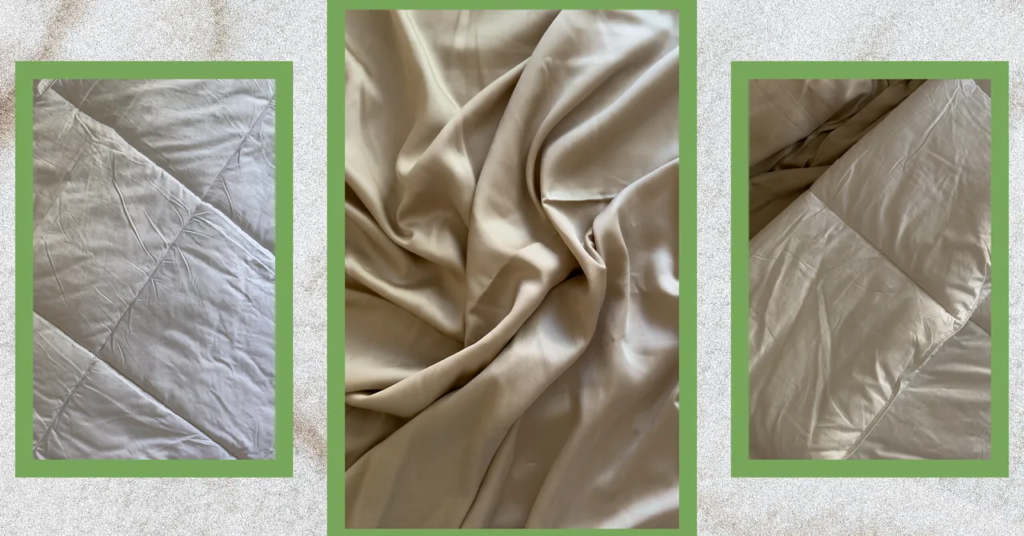
It has a smooth, soft feel and is often appreciated for its comfortable drape. It can be used in dresses, shirts, trousers, underwear, and other everyday clothing.
There is something refreshing about this kind of innovation.
You don’t need to understand complicated textile science to appreciate the result. You simply put on the garment and notice that it feels comfortable.
That is often the best kind of technology—the kind that improves the experience without demanding attention.
Mycelium Materials Are Bringing Biology Into Fashion
Now we get to one of the more unusual developments.
Mycelium is the network that forms the main structure of fungi. Researchers and material companies have been exploring ways to grow and process mycelium into sheets with leather-like qualities.
For fashion, this is particularly interesting because leather-like materials are widely used in accessories.
A mycelium-based material could potentially be used in handbags, shoes, wallets, and other products where appearance, texture, and flexibility matter.
But it is important to keep expectations realistic.
The material still has to prove itself in everyday use. Consumers need products that can handle movement, moisture, storage, and years of wear.
A fascinating material is only useful if it can become a reliable product.
That is the challenge facing many new fashion materials.
Plant-Based Leather Alternatives Are Becoming More Creative
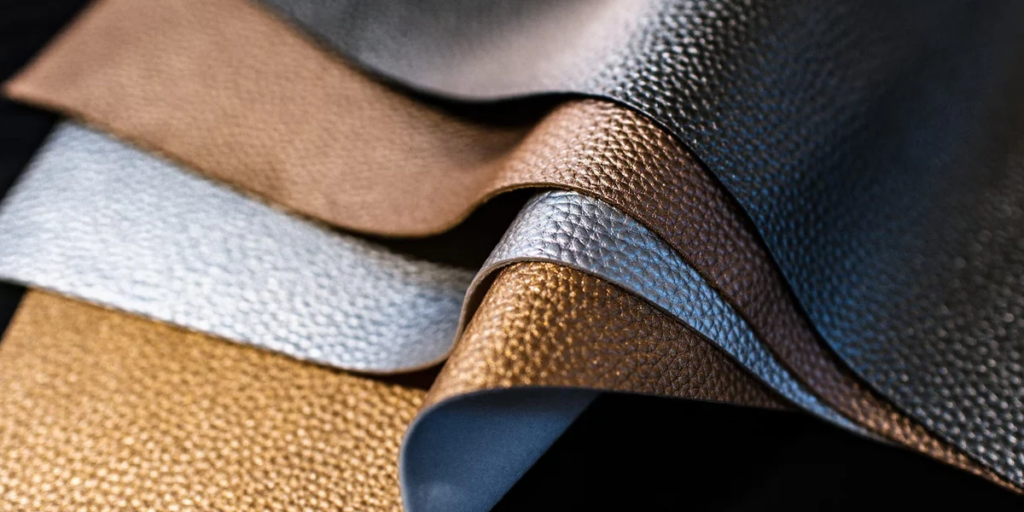
The world of alternative leather is no longer limited to one type of synthetic material.
Developers are exploring different plant sources and agricultural by-products to create materials that can be used for fashion accessories and other applications.
Materials inspired by cactus, pineapple fibers, apples, grapes, and other plant sources have attracted attention.
What I find interesting here is the shift in thinking.
Fashion designers are no longer limited to asking, “What traditional material can we use?”
They can also ask, “What other materials are available to us?”
That question creates room for experimentation.
However, shoppers should remember that “plant-based” doesn’t automatically tell the whole story. A product may contain several different components, coatings, or binders. Understanding the actual composition is still important.
Smart Fabrics Could Make Clothes More Than Just Clothing
Clothing has always had practical functions. It keeps us warm, protects us from the sun, helps us move comfortably, and sometimes keeps rain away.
Smart textiles take that idea a step further.
A smart fabric can be designed to respond to certain conditions or interact with technology. Depending on the application, it may respond to temperature, moisture, movement, or other inputs.
This could be useful in sportswear, outdoor clothing, performance garments, and wearable technology.
The most exciting possibility isn’t necessarily clothing that looks highly technological.
In fact, the opposite may be more useful.
The technology could become so well integrated into the material that the wearer barely notices it.
A jacket could look like an ordinary jacket while quietly helping manage temperature. A sports garment could provide useful information without requiring a bulky device.
That kind of subtle technology could make smart clothing much easier to accept in everyday life.
Temperature-Regulating Fabrics Could Make Hot Days Easier
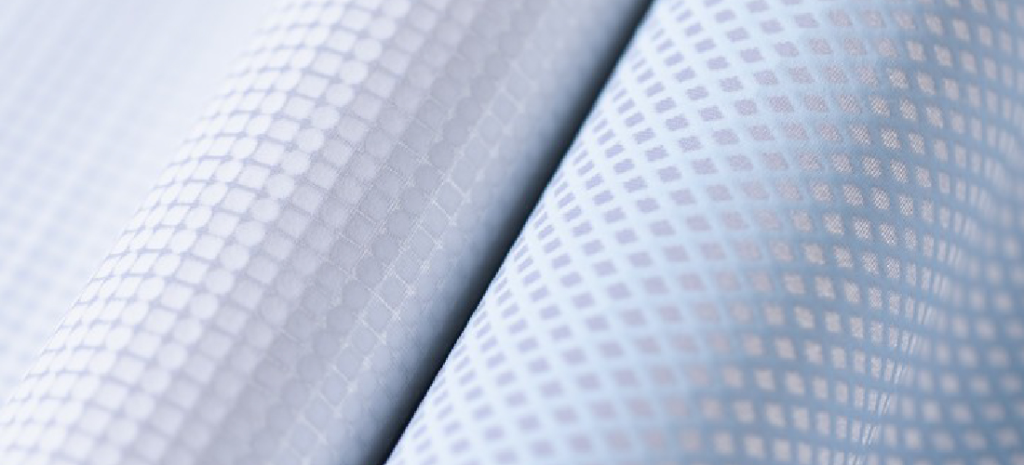
Anyone who lives in a hot climate knows that clothing can make a huge difference to how comfortable a day feels.
The wrong fabric can trap heat and moisture. The right fabric can feel light, breathable, and easy to wear.
This is where temperature-management textiles become interesting.
Some fabrics are designed to help manage heat, moisture, and airflow around the body. They are already relevant to sports and outdoor clothing, but the same principles can be useful for ordinary everyday clothes.
A fabric doesn’t have to be revolutionary to be valuable.
Sometimes making a shirt noticeably more comfortable on a hot day is innovation enough.