
In today’s digital-first world, businesses face immense pressure to grow faster, operate smarter, and stay ahead of competitors. Artificial Intelligence (AI) is no longer just a tech trend—it has become a core driver of business transformation. Intelligent automation powered by AI is enabling companies of all sizes to optimize operations, make data-driven decisions, and scale growth in ways that were previously impossible.
From automating routine tasks to delivering personalized customer experiences and predicting market trends, AI is reshaping the way businesses function internally and engage externally. Companies embracing AI innovation are not only reducing costs but also building resilient and scalable growth models.
What Is Intelligent Automation in Business?
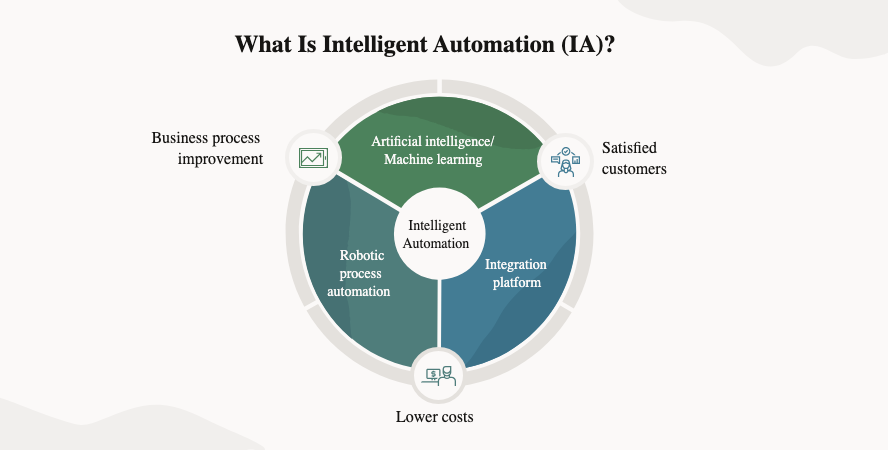
Intelligent automation combines AI technologies like machine learning, natural language processing, and predictive analytics with workflow automation. Unlike traditional automation, which follows fixed rules, intelligent automation learns from data, adapts to changing conditions, and makes smart decisions.
This approach enables organizations to move from reactive problem-solving to proactive, predictive strategies, ensuring faster growth, improved accuracy, and better resource utilization.
AI-Powered Process Automation
One of the most significant benefits of AI innovation is its ability to automate repetitive, time-consuming tasks:
- Invoice processing and data entry
- Inventory updates and supply chain tracking
- Workflow approvals and document verification
By reducing human intervention in these routine tasks, companies free up employees to focus on creative and revenue-generating activities, improving both efficiency and business performance.
Transforming Customer Engagement with AI
Intelligent Customer Support
AI-powered chatbots and virtual assistants can provide instant responses, 24/7 support, and handle common queries without human intervention.
Personalized Customer Experience
Advanced AI systems analyze customer behavior, purchase history, and preferences to deliver tailored recommendations and offers, boosting satisfaction, loyalty, and long-term retention.
Data-Driven Decision Making
Modern businesses generate vast amounts of data daily. AI innovation helps convert this raw data into actionable insights:
- Market trend prediction
- Demand forecasting
- Risk identification
- Sales and revenue optimization
With AI-driven analytics, business leaders can make faster, smarter, and more accurate decisions, gaining a strong competitive edge in rapidly changing markets.
AI in Marketing and Sales Automation
Smarter Marketing
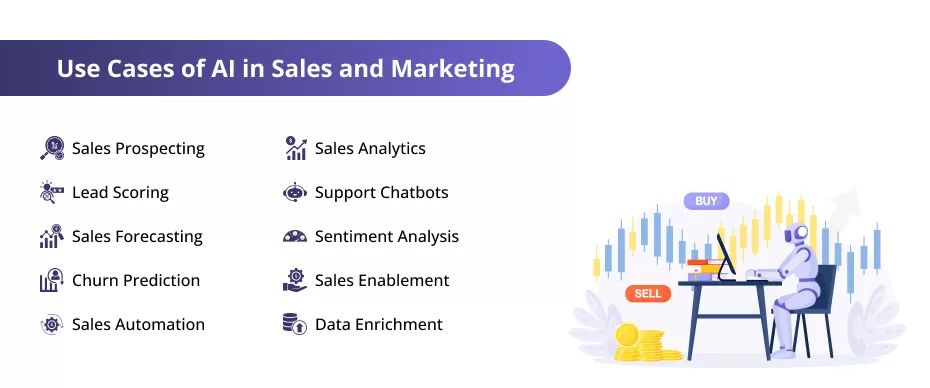
AI is transforming marketing from guesswork to precision-driven growth. By analyzing user behavior, engagement patterns, and demographics, businesses can now deliver the right message to the right person at the right time.
With AI, companies can:
- Personalize marketing messages that feel tailor-made for each customer
- Predict customer intent, so you know what they want even before they do
- Optimize ad spend by automatically allocating budget to the highest-performing campaigns
- Boost conversion rates by targeting users with offers and content that truly resonate
The result? Marketing becomes smarter, faster, and far more effective—giving businesses a clear edge in a crowded marketplace.
AI in Sales
AI-powered CRM systems are now the secret weapon of top-performing sales teams. They help businesses not just track leads, but prioritize and nurture them intelligently.
With AI, sales teams can:
- Identify high-quality leads who are most likely to convert
- Forecast sales outcomes with greater accuracy, helping plan revenue confidently
- Recommend optimal follow-up actions, so no opportunity slips through the cracks
By automating these insights, businesses enjoy higher efficiency, better pipeline management, and consistent growth, allowing sales teams to focus on building relationships and closing deals rather than manual tracking.
Workforce Intelligence and HR Automation
AI innovation is transforming talent management:
- Automated resume screening and candidate matching
- Performance analysis and skill gap detection
- Personalized training recommendations
- Employee engagement insights
These tools reduce hiring bias, improve productivity, and align workforce capabilities with business growth goals.
Key Benefits of AI Innovation in Business Growth
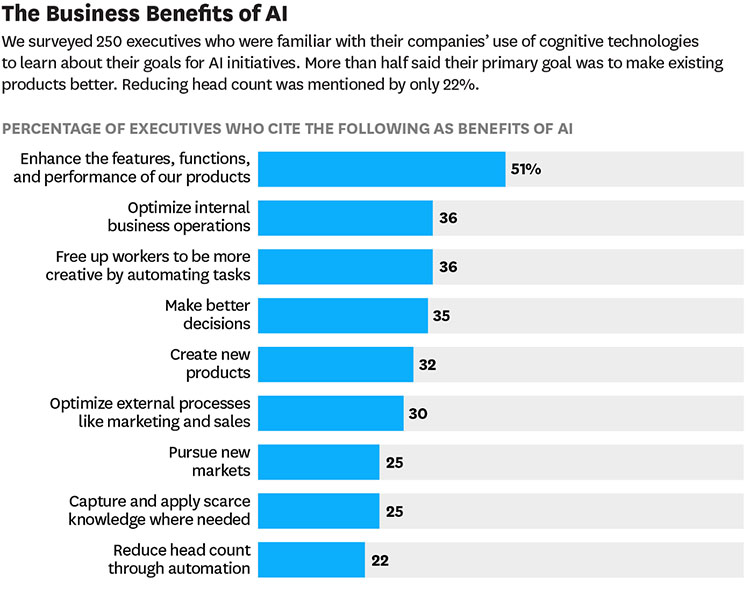
- Operational efficiency and time savings
- Cost reduction through process automation
- Scalable growth models that adapt to changing demand
- Enhanced accuracy and consistency
- Improved customer satisfaction and retention
Together, these benefits help businesses grow smarter, faster, and more sustainably.
Challenges and Responsible AI Adoption
Despite its advantages, AI innovation comes with challenges:
- Data privacy and cybersecurity concerns
- Algorithmic bias
- Workforce adaptation and reskilling needs
Responsible adoption requires ethical guidelines, human oversight, and transparent systems to ensure AI supports human intelligence rather than replacing it.
The Future of Intelligent Automation
The next wave of AI innovation will focus on collaborative intelligence, where humans and machines work seamlessly together. Businesses will leverage AI not only for automation but also for:
- Strategic planning and innovation
- Market intelligence and predictive modeling
- Long-term decision support and resilience
Early adopters of AI innovation will be industry leaders, capable of adapting to change and sustaining competitive growth.
Conclusion: Why Intelligent Automation Is Critical for Growth
AI-driven intelligent automation is redefining business growth. By streamlining operations, enhancing customer experience, and enabling data-backed decisions, AI empowers businesses to scale efficiently and compete globally.
Companies that embrace AI today are not just optimizing processes—they are building the future of smart, resilient, and scalable business growth.
FAQs
1. What is intelligent automation in business?
It is the combination of AI and automation technologies that learn, adapt, and optimize workflows, improving efficiency and scalability.
2. How does AI help businesses grow faster?
By automating repetitive tasks, predicting market trends, and personalizing customer experiences, businesses can focus on strategic growth initiatives.
3. Can small businesses benefit from AI innovation?
Yes, affordable AI tools allow even small businesses to automate tasks, analyze data, and scale growth efficiently.
4. What are the main risks of AI adoption?
Data privacy, cybersecurity, algorithmic bias, and workforce adaptation are key risks that require responsible implementation.
- AI Innovation in Business: How Intelligent Automation Is Redefining Growth
- Powerful Best Boardroom AI: Driving Dave’s Next Fintech Growth?

- Powerful Artemis II Moves Closer to Launch After Critical Rehearsal

- Why Innovation Is the Key to Sustainable Growth

- How Mastering Skills Is the New Career Security in the AI Era

- How AI Logo Makers Help Build a Powerful Brand Identity
Disclaimer: This content is for informational purposes only. Businesses should implement AI strategies based on individual needs, industry regulations, and professional guidance.
#AIInnovation #IntelligentAutomation #AIinBusiness #Carrerbook #Anslation #BusinessGrowth #SmartBusiness #DigitalTransformation #AutomationTrends #FutureOfBusiness #AIForGrowth #TechInnovation